Space weather
New understanding of solar storms
An Astrum video on recent advances in understanding the sun’s most powerful storms — and why the next one could be worse. Watch the video.
Thanks VK4NH, Ray.
News & notes
Net announcements, space weather events, solar cycle updates and reading recommended by members — back to the first net in 1970. Have something to share? Email the webmasters.
VK4TM, Terry, Saturday net control, became a silent key. Let us carry his legacy into the future.
An Astrum video on recent advances in understanding the sun’s most powerful storms — and why the next one could be worse. Watch the video.
Thanks VK4NH, Ray.
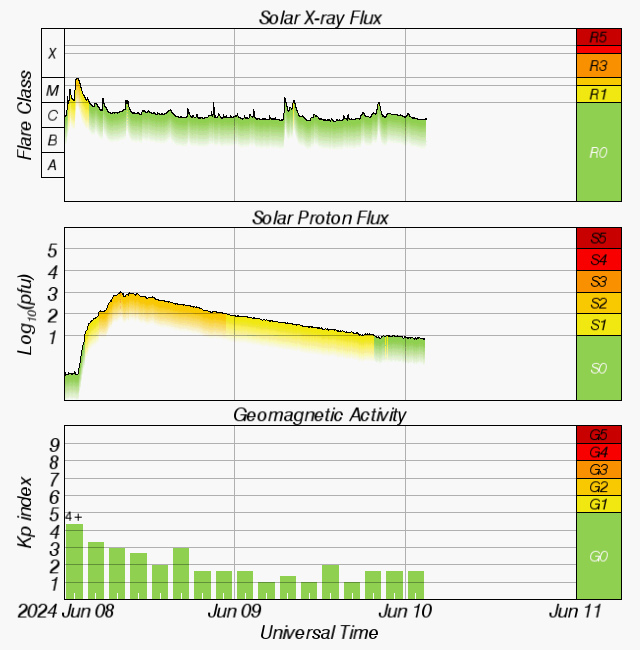
A CME erupted but did not produce a geomagnetic storm at Earth. NOAA’s overview shows the X-ray and proton flux and the quiet Kp that followed. Watch for CMEs yourself on the LASCO coronagraphs.
A series of coronal mass ejections produced the strongest geomagnetic storm in two decades, with aurora seen at unusually low latitudes. The overview shows the Kp reaching storm levels.
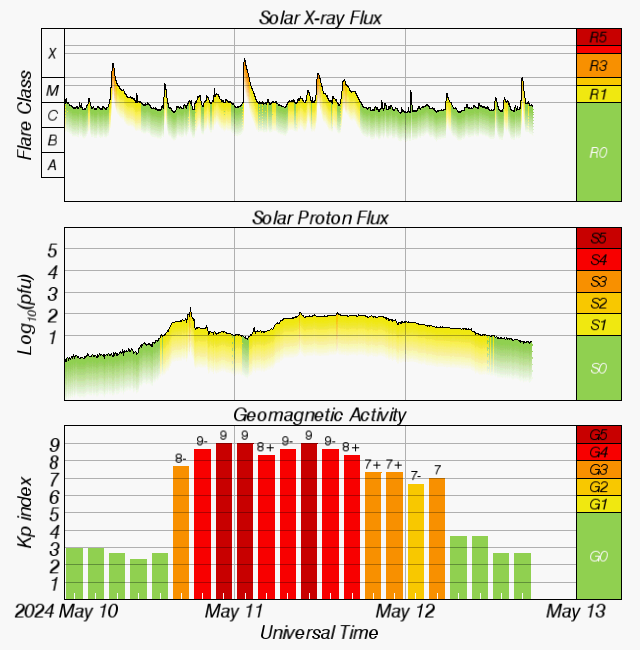
NOAA’s Space Weather Prediction Center issued a geomagnetic storm watch. For aurora alerts, see the University of Alberta’s AuroraWatch.
The quarterly magazine of the Radio Amateur Society of Australia is available to read online. Browse QTC.
Thanks VK4NH, Ray.
NOAA released an updated, experimental prediction for Solar Cycle 25. See the current solar cycle progression.
A QSO on the net is a brief exchange of call sign, signal report, name, location and a read-back.
The classic antenna guide by Joseph Carr (2001). PDF.
Thanks VK4NH, Ray.
A free online library of materials and collections related to amateur radio, hosted by the Internet Archive. Explore DLARC.
Thanks VK4NH, Ray.
McIntosh and colleagues (October 2022) unify the sun’s Hale magnetic cycle with the “extended solar cycle” paradigm. Read the paper.
Sunspot activity on the sun is seriously exceeding official predictions, reports ScienceAlert (8 April 2022). Read the article.
Thanks VK5XB, Hank.
The Royal Academy of Engineering’s 2013 report on extreme space weather and its impact on engineered systems and infrastructure. Read the report.
Thanks ZL1PWD, Peter.
A chronological history of the development of radio by Greg Whiter, VK4IG. Read the history.
Thanks WA6SZE, Bill.
The official 2019 Cycle 25 forecast predicted a weak cycle. A minority team at NCAR predicted one of the strongest on record, triggered by a “solar terminator” event that may soon occur. Listen out for propagation changes.
Thanks VK4NH, Ray, and ZL1PWD, Peter.
The IARU’s Ethics and Operating Guide for Radio Amateurs (PDF) is now linked from the Propagation page.
Noise during geomagnetic storms (elevated A and K) is caused by geomagnetic perturbation of electric fields in conductive Earth materials. These induce geoelectric currents in power lines, data cables, pipelines and railway tracks. Geomagnetic QRN may be ionospheric, local, or both.
A huge collection of radio and broadcast magazines and books as PDFs. Visit the archive.
Thanks WA6SZE, Bill.
The International Telecommunication Union’s ITU News Magazine issue on the history of radio.
Thanks WA6SZE, Bill.
VK4CC, Col, recorded a memorial to the silent keys of the ANZA DX Net.
NASA Marshall plots the observed sunspot number and radio flux against the Cycle 25 forecast, updated monthly. See the plots.
Earth’s core magnetic field is the subject of an AGU Eos special issue, Tracking Magnetic Fields (January 2021, PDF). Try to imagine that the Earth’s magnetic field is more complicated than we can imagine…

A 10-year time-lapse of the sun from SDO — one hour built from 425 million images — and 25 years of the LASCO C3 coronagraph from SOHO, with flares, comets and planets.
Thanks WA6SZE, Bill.
Many early-cycle flares occur at high latitudes on the sun, so are less effective at Earth. Watch the latest LASCO C2 and C3 images for mid-latitude, Earth-directed flares.
Congratulations to VK3QI, Peter, winner of the net’s 50th anniversary quiz.
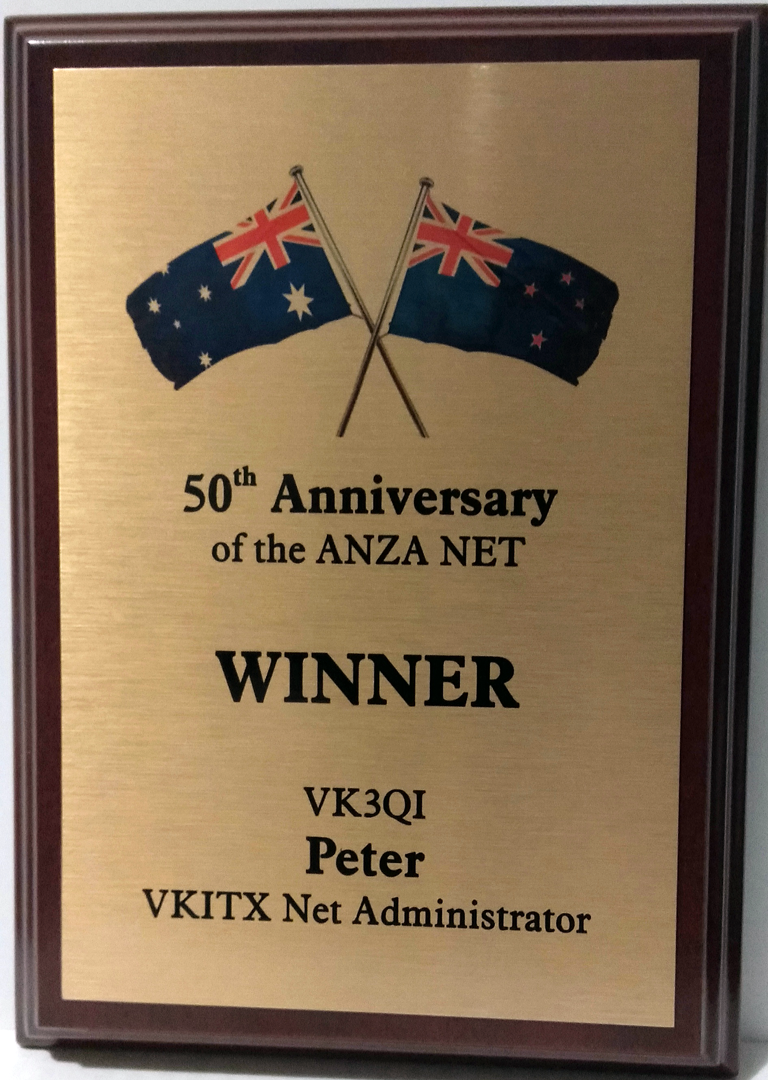
Fifty years of continuous operation since Percy, VK3PA, opened the first net in 1970.
VK4LJ, John, became a silent key. Let us carry his legacy into the future.
A Cycle 25 spot appeared briefly in the mid-latitudes of the southern solar hemisphere (lower-right quadrant).
The Solar Cycle 25 Prediction Panel expects the Cycle 24–25 minimum between mid-2019 and mid-2020, with Cycle 25 peaking in 2023–2026 at a sunspot number of 95–130 — well below the record range of 140–220.
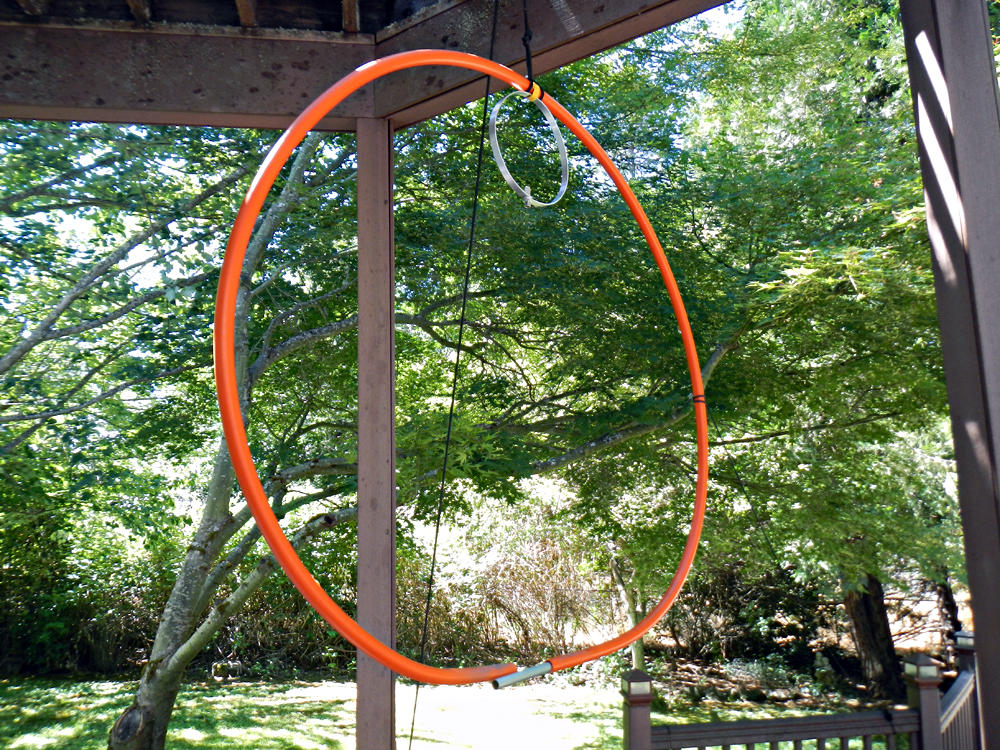
Receive off the side of a beam with a simple 20 m magnetic loop (5 m circumference, can be built of coax), inductively fed with a 1 m driven loop and tuned with a tubular capacitor. Directional in the plane of the loop. Hang it from a tree, one or more loop diameters above ground. Slide the capacitor tube in and out for maximum noise, then fine-tune for lowest SWR.


NASA forecast the next sunspot minimum for 2019–2020. Read more.
Hear how your signal is getting out using remote receivers over the internet.
Thanks ZL1PWD, Peter.
VK3PA (later VK4CPA), Percy, opened the first ANZA DX Net. Read his story in the 1987 and 1990 Amateur Radio articles, or see more on the home page.
No items in this category.